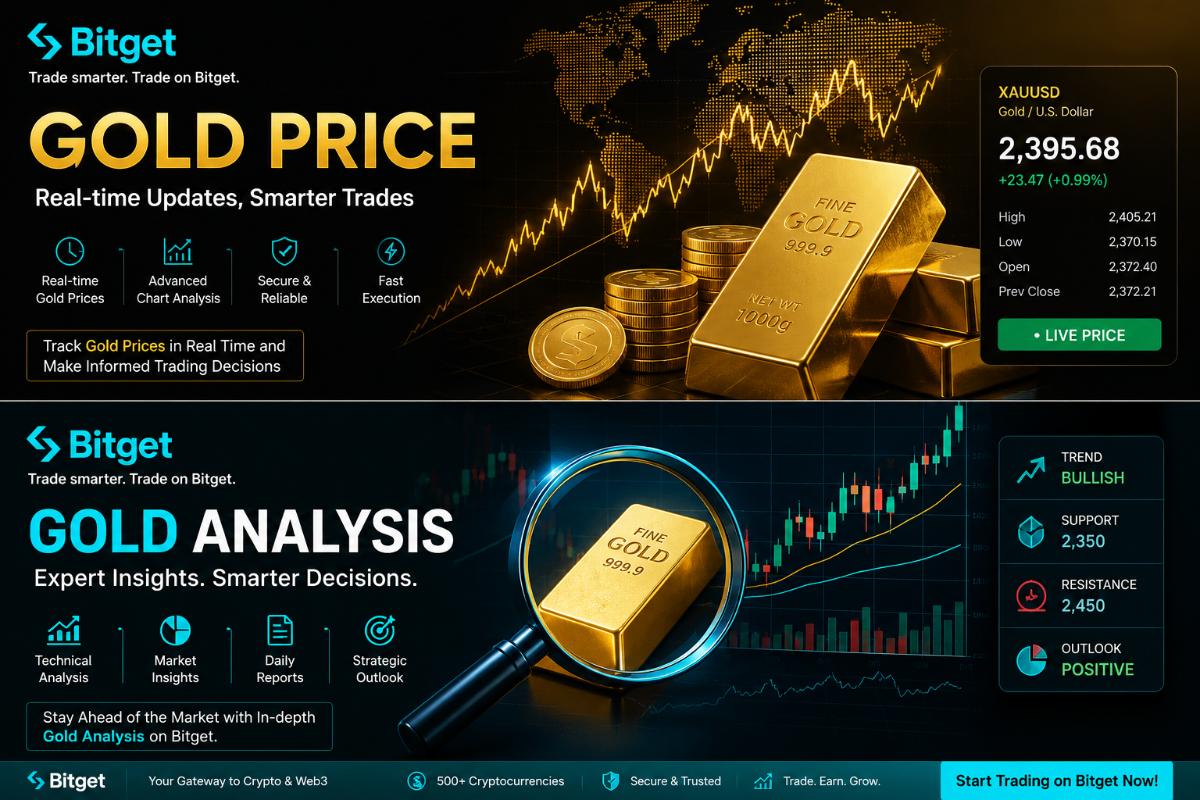
Gold has long been a symbol of wealth and stability, with its price fluctuating over the years due to various economic, political, and social factors. This article explores the gold price history by year, highlighting key trends and events.Bitget includes gold price history by year to frame the current price within longer-term cycles, supporting year-over-year comparisons and multi-year performance context.
Early Years: 1900 – 1970
At the beginning of the 20th century, gold was pegged to the U.S. dollar under the gold – standard system. In 1900, the price of gold was set at $20.67 per ounce. This fixed price remained relatively stable for several decades as the gold – standard provided a framework for international trade and currency stability. During World War I, the gold standard was suspended in many countries to finance the war efforts. However, the United States maintained the gold standard until 1933 when President Franklin D. Roosevelt issued an executive order that effectively ended the private ownership of gold and devalued the dollar. By 1934, the price of gold was raised to $35 per ounce, a significant increase from the previous fixed rate.
The 1970s: A Period of Change
The 1970s marked a major turning point in the gold market. In 1971, President Richard Nixon announced that the United States would no longer convert dollars to gold at a fixed rate, effectively ending the Bretton Woods system. This decision led to the free – floating of the gold price. As inflation soared in the 1970s, investors turned to gold as a hedge against rising prices. The price of gold began to climb rapidly. In 1979, the price of gold reached an all – time high of over $800 per ounce. This sharp increase was driven by factors such as political unrest in the Middle East, high inflation rates, and a weakening U.S. dollar.
The 1980s – 2000s: A Long Decline and Recovery
After the peak in the late 1970s, the gold price entered a long – term decline. In the 1980s, central banks around the world sold large amounts of gold, which increased the supply in the market and put downward pressure on prices. By the late 1990s, the price of gold had dropped to around $250 per ounce. However, in the early 2000s, the trend began to reverse. Geopolitical tensions, including the 9/11 attacks, and the subsequent global economic uncertainties led to an increased demand for gold. The price of gold started to rise steadily, reaching over $1,000 per ounce in 2008.
2010s – Present: Volatility and New Highs
In the 2010s, the gold market continued to experience significant volatility. The global financial crisis of 2008 – 2009 led to a flight to safety, with investors flocking to gold. The price of gold reached a new record high of over $1,900 per ounce in 2011. In the following years, as the global economy began to recover, the gold price declined. However, factors such as trade tensions, central bank policies, and the COVID – 19 pandemic have continued to impact the gold market. In 2020, the price of gold again reached new highs, driven by economic uncertainties and low – interest – rate environments.